


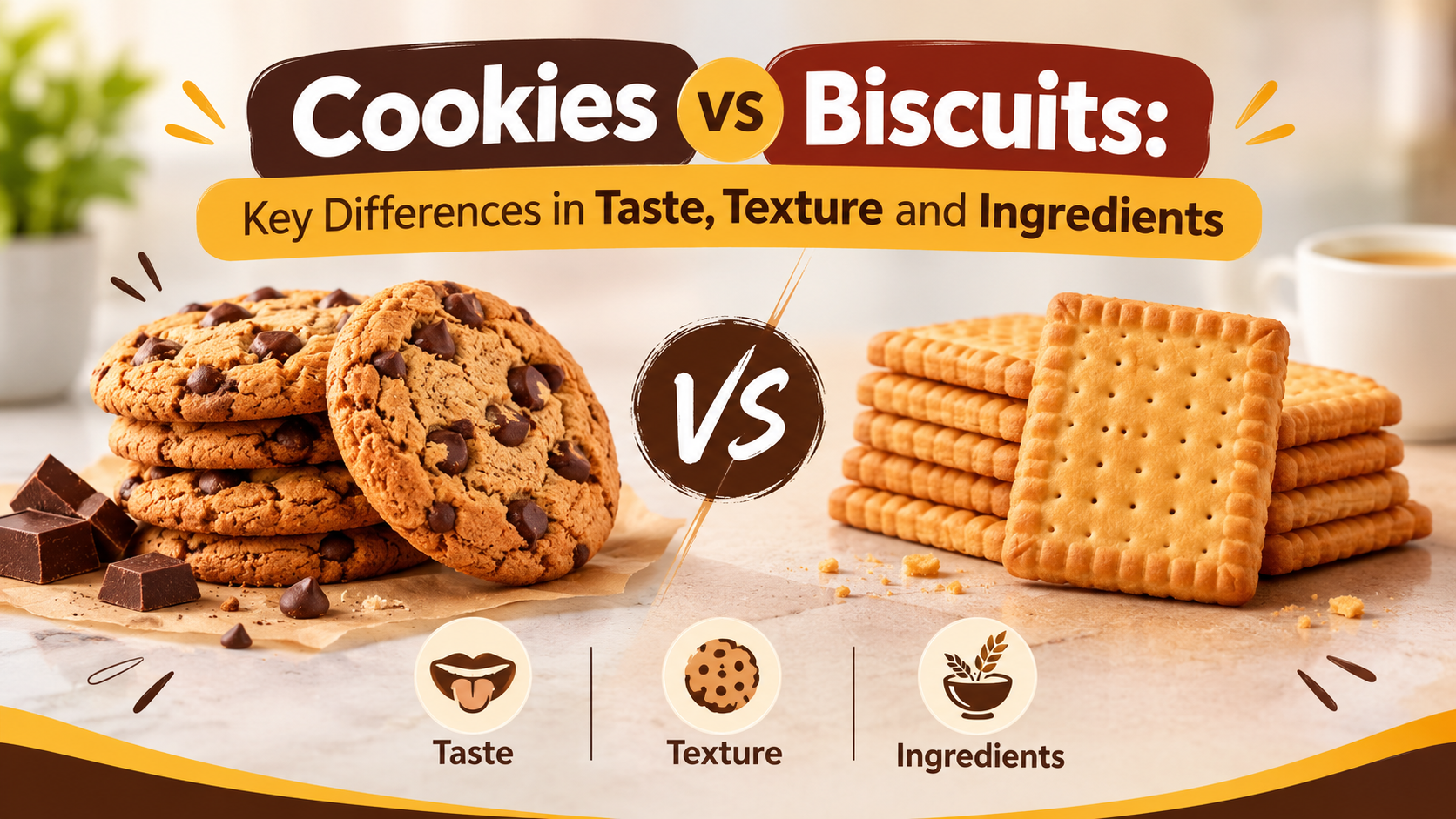
A lot of people mix up cookies and biscuits every day. The names change depending on where you live, and that leads to plenty of confusion. The biscuit vs cookie question comes up often when someone reaches for a sweet treat with tea or coffee. This piece clears up the main points about taste, texture and what goes into each one.
What Are Biscuits?
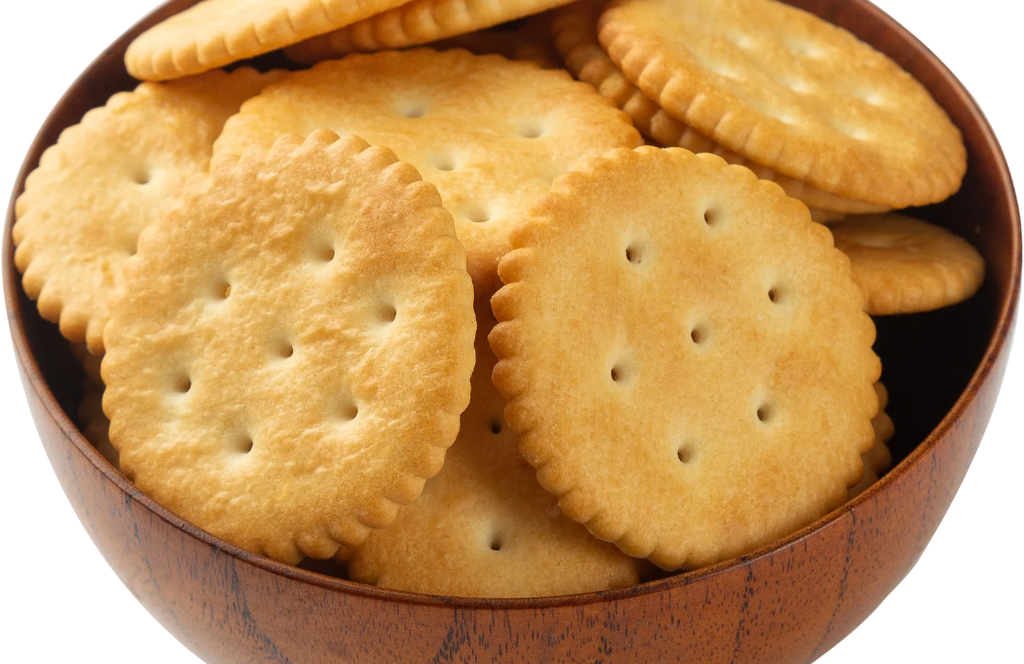
The old meaning of biscuit points to something cooked twice. Early ones were baked then dried out so they lasted longer on long trips. Today the name means different things in different countries.
In India, the UK and Australia a biscuit is the crisp or crunchy item you often have with tea. It is usually thinner and drier. In America the same word means a soft, flaky savoury bread closer to a scone.
Here we talk about the everyday sweet biscuit common outside North America. These end up with very little moisture left, around one to five percent. That low water level is why they stay crisp and keep well in a tin.
Cookies vs Biscuits: Key Differences
The biscuit vs cookie difference shows up most in the dough, the amount of sugar and fat, and how they feel when you bite them.
| Feature | Typical Cookie | Typical Biscuit |
| Dough | Soft before it goes in the oven | Firmer with less water |
| Sugar and fat | Higher amounts | Moderate or lower |
| Moisture after baking | Can stay softer inside | Very low, one to five percent |
| Feel when eaten | Soft, chewy or lightly crisp | Dry and snaps clean |
| How it bakes | Spreads out more | Keeps its shape and stays thinner |
These are the usual patterns. Recipes can shift a bit.
Difference in Taste and Sweetness
Cookies come across sweeter and fuller in flavour. The extra sugar and fat plus things like chocolate or nuts give them a stronger taste. Brown sugar shows up a lot because it keeps some moisture and adds a deeper note.
Biscuits stay milder. Many taste simply buttery or just lightly sweet. That makes them a good match for tea or coffee. Some stay plain while others carry a light spice or fruit note. Because they are drier the flavour stays cleaner and less heavy.
Difference in Ingredients
Both use flour, sugar and fat as the base. The amounts and the extras decide the final result.
Cookies often have eggs to hold everything together and keep the soft feel. More sugar and fat cut down on gluten forming and help the dough spread and stay chewy. Soft wheat flour works best here.
Biscuits, especially the crisp ones, use less water and sometimes less sugar and fat compared to the flour. Hard dough types let a bit of gluten form for firmness. Short dough types use more fat to stop the gluten from linking up so the biscuit stays tender and breaks easily. Eggs appear less often in classic biscuit recipes.
The biscuit vs cookie choice often comes down to these ingredient levels.
How Baking Changes Texture
Heat drives out water and sets the structure in both cases.
Cookie dough is softer and richer. Fat melts and sugar dissolves so the dough spreads. Higher sugar and fat slow down the full setting of starch and protein. That is why the middle can stay soft if you do not bake too long. Moderate heat for a longer time is common.
Biscuit dough starts drier or firmer. Baking pulls out almost all free water and leaves a crisp bite. Hard dough needs enough heat to dry the gluten network. Short dough leans on the fat and sugar for a tender snap. The final low moisture gives the clean break people expect.
Even small shifts in water, sugar type, fat temperature or oven time can turn a recipe from chewy to crisp. The biscuit vs cookie result depends a lot on these baking details.
Cookies vs Biscuits: Which One Is Better?
There is no clear winner. It depends on the moment.
Pick a cookie when you want something soft and sweet with extra flavour from the mix-ins. It works as a satisfying snack. Pick a biscuit when you want a crisp, lighter option that goes well with a hot drink and stores easily. Both can be made with simple or better ingredients. The biscuit vs cookie decision is mostly about the texture you prefer and how you plan to eat it.
Some people look for a good everyday option that fits a balanced approach. Either one can fit into a normal diet when eaten in reasonable amounts.
Conclusion
Cookies and biscuits belong to the same broad group of baked goods with low moisture made from flour, sugar and fat. The biscuit vs cookie differences come from sugar and fat levels, how the dough is handled, the moisture left after baking, and the names used in different places. Cookies lean richer and softer. Biscuits lean drier and crisper. Knowing these points helps you choose what you want or adjust a home recipe. The next time the biscuit vs cookie question comes up you will have a clearer answer.
Looking to launch your own cookie range? Partner with Qoot Food for contract manufacturing and private label cookie solutions. We help brands across India and international markets bring their cookie products to market.

