


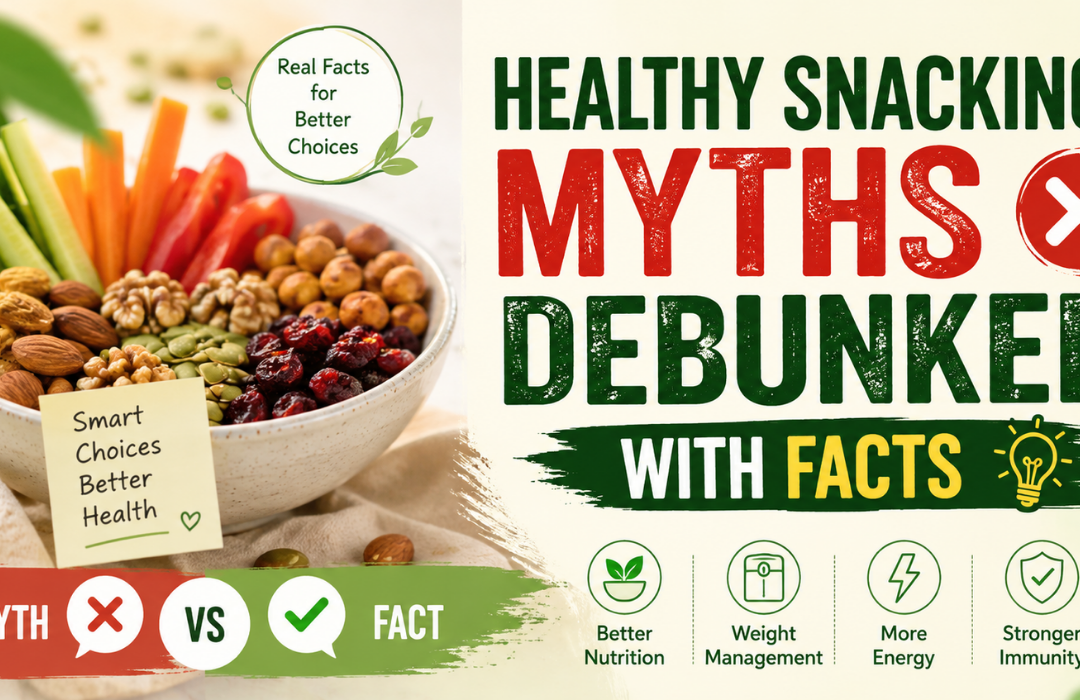
Most of us eat snacks every day. Many packaged ones show big words on the front that look good. FSSAI in India has clear rules about what companies can write. The front claims are not required. The nutrition details and ingredient list are required and more useful. A product can still have lots of salt, sugar or processed stuff even if one claim looks fine. Here are eight common myths about healthy snacks and the real facts from Indian rules.
Myth 1: If the package says “healthy,” it actually is
FSSAI says companies cannot call food “healthy” if it makes people think the product itself improves health. Any claim about a healthy diet has to follow ICMR guidelines and cannot pick just one or two good points. That one word does not make the snack good. Always look at the full nutrition details for sugar, fat, salt and the ingredients. Real foods with short lists are better when you want healthy snacks.
Myth 2: Low-fat or fat-free snacks are the better choice
FSSAI lets a product say “low fat” only if it has 3 g or less of fat in 100 g of solid food, or 1.5 g or less in 100 ml of liquid. “Fat-free” needs 0.5 g or less. When makers take out fat they often put in more sugar or refined starch so the taste stays the same. The kind of fat matters more than how much there is. Fats from nuts, seeds and some oils are better for the body. Low fat is not always better if sugar or salt is high in healthy snacks.
Myth 3: Protein bars are always a smart snack choice
Protein bars can give good protein. Many also have high sugar, sugar alcohols or long lists of processed things. Even if the protein amount meets FSSAI rules the bar can still have high calories or additives. Look for decent protein, not too much added sugar, some fibre and simple ingredients. Roasted chana, a few nuts, curd or a boiled egg often work better as healthy snacks.
Myth 4: Gluten-free packaged snacks are healthier for everyone
FSSAI says gluten-free means the product has 20 mg or less of gluten in each kg. This matters for people with celiac disease or real gluten problems. For others, these packaged snacks are not automatically better. Makers often add refined starch, extra sugar or fat so they taste and feel right. They can have less fiber and fewer nutrients. If you do not need to avoid gluten, normal whole grain options usually give better nutrition for healthy snacks.
Myth 5: Baked snacks are always better than fried ones
Baked snacks take in less oil so they usually have less fat and fewer calories. The difference is not always big. Some baked ones get extra carbs or salt for taste and crunch. Both baked and fried packaged snacks can still be highly processed. How they are cooked is only one part. The ingredients, salt amount and how much you eat matter more when picking healthy snacks.
Myth 6: Low-calorie packaged snacks are automatically a good choice
FSSAI lets a product say low calorie or low energy if it has 40 kcal or less in 100 g of solid food, or 20 kcal or less in 100 ml of liquid. Low calories can help with weight loss. These snacks sometimes do not fill you up because of artificial sweeteners or fillers. You might eat more soon after. A snack that has some protein, fibre or good fat keeps you full longer even if the calories are a bit higher. These are better healthy snacks options.
Myth 7: Organic packaged snacks are always healthier
In India, organic claims need proper certification from the National Programme for Organic Production or Participatory Guarantee System. The pack must also show the official logo. Without the logo and valid certification, the claim is not allowed. Organic means fewer synthetic pesticides and some restricted additives. It does not mean low sugar, low fat or low calories. An organic biscuit is still a biscuit. Check the nutrition label the same way you check any other food when looking for healthy snacks.
Myth 8: Snacks with no added sugar are automatically low in calories
FSSAI allows “no added sugar” only when no sugar of any kind was put in during making. If the food has natural sugars the label must say it contains naturally occurring sugars. No added sugar does not mean zero sugar or low calories. Natural sugars still add to the total calories and carbs. Some products use sugar alcohols instead and these can upset the stomach for some people. Always check the total carbs and calorie numbers on healthy snacks.
Conclusion
The best way is to pick whole or lightly processed food most of the time. Fruit, nuts, roasted chana, curd or vegetables with a simple dip are good. When you buy packaged snacks skip the big front claims. Read the required nutrition details and ingredient list. Look for fair amounts of sugar, fat and salt plus some protein or fibre. FSSAI rules help keep claims honest. Checking the label yourself helps you choose better healthy snacks for weight loss and everyday options.
Looking for a reliable contract manufacturer for healthy snacks? Qoot Food provides private label options with ISO certification and clean quality standards. Contact Qoot Food today to make better snacks for your brand.

